What Are the Pros and Cons of Acrylic Display Cases Compared to Glass Display Cases?
When choosing a display case for collectibles, retail products, electronics, cosmetics, or other valuable items, one of the most common questions is:
Should I choose an acrylic display case or a glass display case?
Both materials have their advantages and disadvantages. The right choice depends on your products, budget, retail environment, and how you plan to use the display case.
Let’s take a closer look at the differences between acrylic and glass display cases.
Acrylic Display Cases vs. Glass Display Cases
| Feature | Acrylic Display Case | Glass Display Case |
|---|---|---|
| Weight | Lightweight | Heavy |
| Impact Resistance | High | More likely to break |
| Transparency | Excellent | Excellent |
| Safety | Safer if dropped | Can create sharp broken pieces |
| Design Flexibility | Easy to customize | More difficult to customize |
| Transportation | Easier and usually more economical | More difficult and costly |
| Custom Shapes | Easy to manufacture | More limited |
| Installation | Relatively easy | Requires more care |
| Scratch Resistance | More prone to scratches | More scratch resistant |
| Premium Appearance | Modern and clean | Classic and premium |
| Maintenance | Easy to clean | Easy to clean |
Pros of Acrylic Display Cases
1. Lightweight
One of the biggest advantages of acrylic is its lightweight construction.
Acrylic is significantly lighter than glass, making acrylic display cases easier to move, install, and transport.
This is especially useful for retail stores, exhibitions, trade shows, pop-up stores, and e-commerce shipments where transportation and handling are important considerations.
2. More Resistant to Impact
Acrylic is much less likely to shatter than glass when exposed to impact.
This makes acrylic a practical choice for environments where customers, employees, or children may come into contact with the display case.
If an acrylic case is accidentally dropped, it may crack or become damaged, but it does not normally break into sharp pieces like conventional glass.
3. Easy to Customize
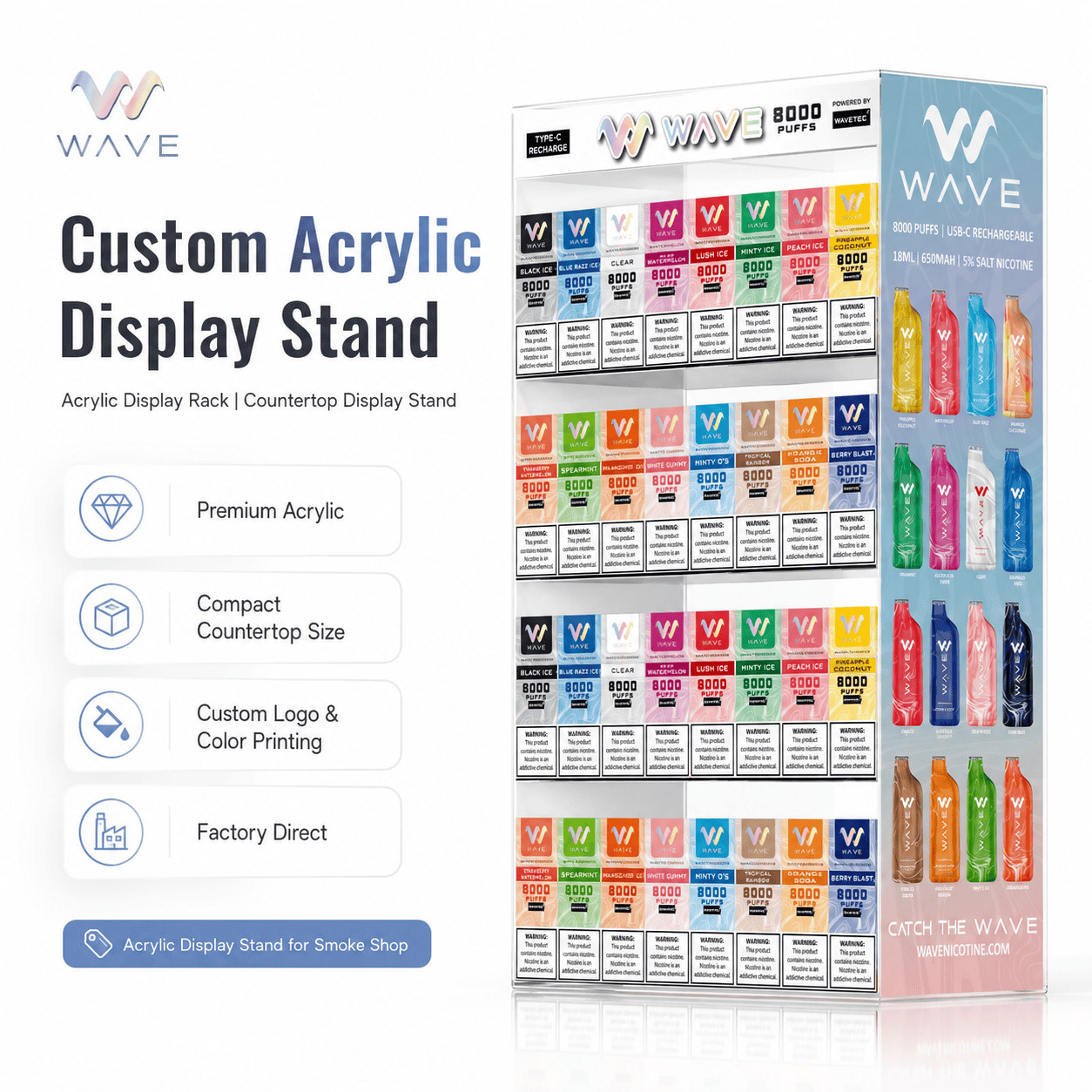
Acrylic is highly versatile and can be manufactured into many different shapes and structures.
For example, acrylic display cases can be customized with:
Different sizes and thicknesses
Multiple compartments
Sliding doors
Hinged doors
Magnetic doors
Locks
Shelves
Colored acrylic
Frosted acrylic
Printed logos
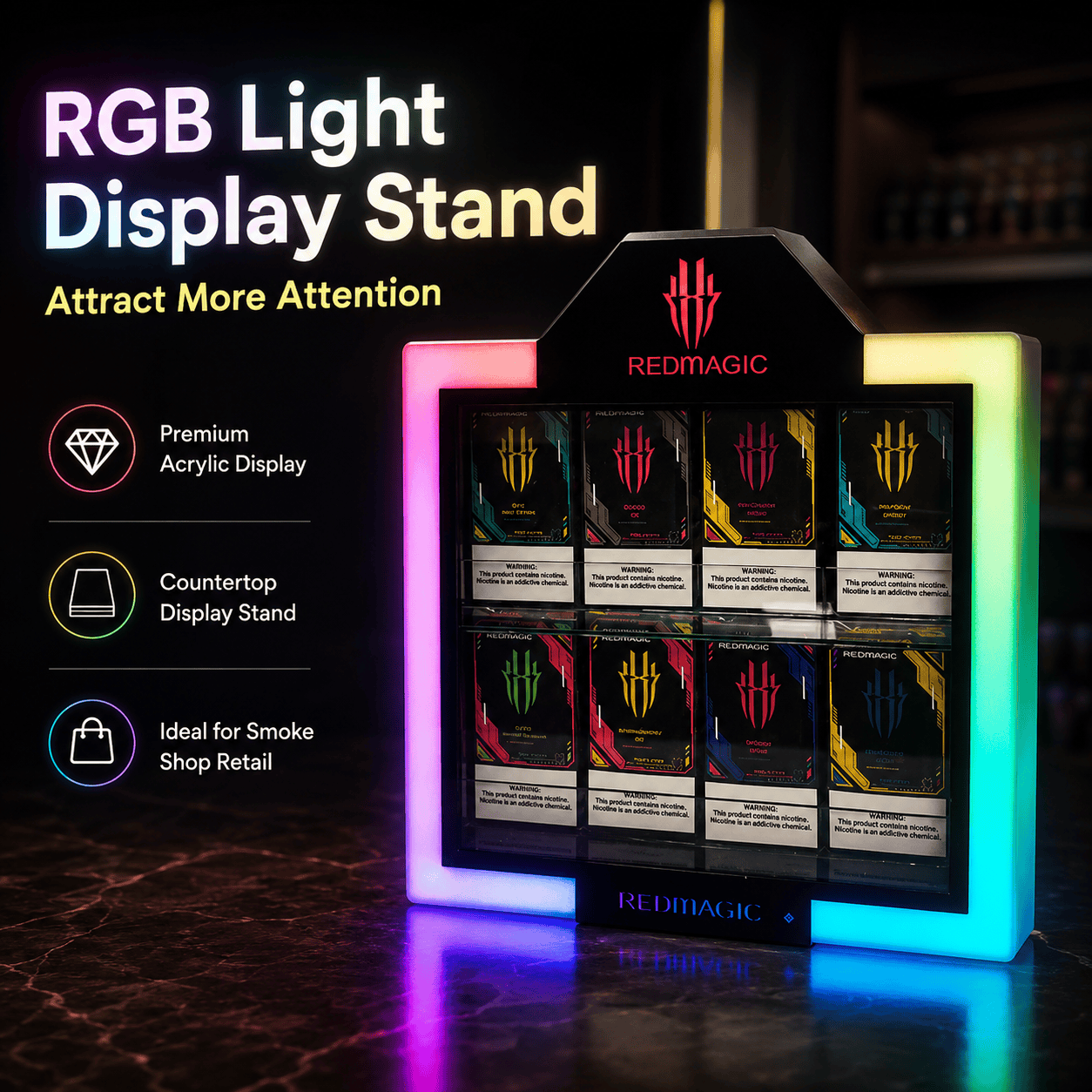
LED lighting
This makes acrylic particularly suitable for brands that need custom display solutions.
4. Excellent Transparency
High-quality clear acrylic offers excellent optical clarity and allows customers to clearly see the products inside.
For collectibles, toys, electronics, cosmetics, and other products where appearance is important, a clear acrylic case can provide excellent visibility while protecting the product from dust and accidental contact.
5. Easier to Transport
Because acrylic display cases are lightweight and less fragile than glass, they are generally easier to package and transport.
This can be particularly important for international shipping.
Lower weight can also help reduce transportation costs, while the lower risk of breakage can make logistics easier to manage.
6. More Design Possibilities
Acrylic can be cut, bent, drilled, polished, printed, and assembled into many different designs.
This gives designers more freedom to create displays that match a brand’s visual identity and product requirements.
For businesses looking for a unique, branded display case, acrylic can be a very flexible material.
Cons of Acrylic Display Cases
1. More Prone to Scratches
The biggest disadvantage of acrylic compared with glass is that its surface can scratch more easily.
However, this can be minimized by using protective film during production and transportation and by cleaning the surface with appropriate materials.
For long-term use, proper care and maintenance are important.
2. Can Be Affected by Certain Chemicals
Some strong cleaning chemicals or solvents can damage acrylic surfaces or cause cracking.
For this reason, acrylic display cases should generally be cleaned with a soft cloth and a cleaner suitable for acrylic.
3. Can Expand or Contract with Temperature
Acrylic can experience slight dimensional changes when exposed to significant temperature changes.
For most indoor retail and display applications, this is not a major issue. However, for specialized environments, the material and design should be selected carefully.
Pros of Glass Display Cases
1. Excellent Scratch Resistance
Glass is generally more resistant to everyday surface scratches than standard acrylic.
For displays that require frequent cleaning or long-term use without surface marks, this can be an advantage.
2. Premium and Traditional Appearance
Glass has a classic appearance that is often associated with premium retail stores, jewelry shops, museums, and high-end showrooms.
For certain brands, the weight and feel of glass can contribute to a luxurious presentation.
3. Good Heat Resistance
Glass generally has better heat resistance than acrylic.
For applications involving higher temperatures, glass may be a more suitable choice.
Cons of Glass Display Cases
1. Heavy
Glass is significantly heavier than acrylic.
Large glass display cases can be difficult to move and may require additional support during installation and transportation.
2. More Fragile
Although tempered and laminated glass can improve safety and durability, glass can still break under sufficient impact.
This can be an important consideration for busy retail environments.
3. More Difficult to Customize
Creating highly customized glass structures can require specialized manufacturing processes.
Compared with acrylic, it can be more difficult to create complex shapes, integrated features, or frequent design changes.
4. Higher Transportation Risk
Glass requires careful packaging and handling during transportation.
For international shipping, additional protective packaging may be necessary to reduce the risk of damage.
This can increase both shipping complexity and overall logistics costs.
Which One Should You Choose?
There is no single answer that works for every application.
Choose Acrylic If You Need:
Lightweight construction
Custom shapes and sizes
Easy transportation
Better impact resistance
Branded displays
LED or other integrated features
Cost-effective custom solutions
Retail or exhibition displays
Collectible and toy display cases
Choose Glass If You Need:
Excellent scratch resistance
High heat resistance
A traditional premium appearance
Long-term showroom or museum-style applications
Heavy-duty permanent installations
Acrylic vs. Glass: Which Is Better?
For many modern retail and product display applications, acrylic offers a better balance between appearance, flexibility, safety, weight, customization, and cost.
However, glass can still be the better option when scratch resistance, heat resistance, or a traditional premium appearance is the priority.
The best material depends on what you are displaying and where the display will be used.
At Shenzhen Pura Design Display Co., Ltd., we specialize in custom acrylic display cases and display solutions for retail products, collectibles, electronics, cosmetics, toys, and more.
We can help you choose the right acrylic material, thickness, structure, and design based on your product and application.
Not sure whether acrylic is right for your display? Contact us and tell us about your product. We’ll help you find the right solution.
Related Posts